

Hey there! As a supplier of Hammer Drill Breakers, I often get asked about the noise levels of these powerful tools. It's a crucial factor, especially for those working in noise - sensitive areas or for long periods. So, let's dig into what you can expect in terms of noise when using a hammer drill breaker.
Understanding Noise Levels
First off, noise levels are measured in decibels (dB). A decibel is a unit that quantifies the intensity of sound. For context, a normal conversation usually hovers around 60 dB, while a vacuum cleaner might reach about 70 - 80 dB. Hammer drill breakers, on the other hand, are much louder.
The noise levels of a hammer drill breaker can vary significantly depending on several factors. The type of the tool, its power, the material it's working on, and even the operating technique all play a role.
Factors Affecting Noise Levels
Tool Type
There are different types of hammer drill breakers, and each has its own noise profile. For example, an Electric Rotary Hammer Drill 26mm is generally less noisy compared to a full - fledged Hammer Drill Breaker. The 26mm drill is more focused on drilling tasks and has a relatively smaller motor and impact mechanism. It usually operates at around 90 - 95 dB.

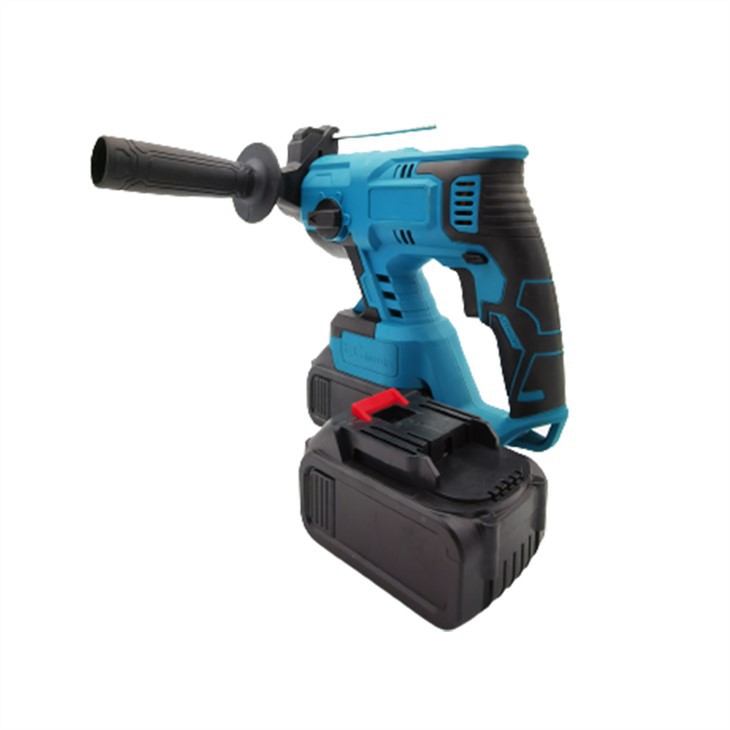
On the other hand, a heavy - duty Hammer Drill Breaker is designed for more intense tasks like breaking concrete and masonry. These beasts can generate noise levels upwards of 100 dB, sometimes even reaching 110 dB or more. A Heavy - duty Electric Hammer, which is often used in construction sites for large - scale demolition work, is one of the noisiest types in this category.
Power
The power of the hammer drill breaker is directly related to its noise output. Higher - powered tools have larger motors and more forceful impact mechanisms. A more powerful motor means more energy is being converted into mechanical work, and a significant portion of this energy is dissipated as sound. So, if you're using a 1500 - watt hammer drill breaker, it's going to be louder than a 1000 - watt one.
Material
The material you're working on also affects the noise level. Drilling or breaking into soft materials like wood or drywall produces less noise compared to hard materials like concrete or granite. When the tool hits a hard surface, the impact creates a more intense vibration, which in turn generates more noise. For instance, when a hammer drill breaker is used on concrete, the hard surface reflects the sound waves more effectively, amplifying the noise.
Operating Technique
How you use the tool matters too. If you're holding the hammer drill breaker loosely, it can vibrate more freely, leading to increased noise. A proper grip and stable stance help reduce unnecessary vibrations and, consequently, the noise level. Also, using the tool at the correct speed and pressure for the task at hand can minimize noise. For example, forcing the tool too hard can cause it to make more noise and can also damage the tool and the work surface.
The Impact of High Noise Levels
Exposure to high noise levels from hammer drill breakers can have several negative effects. For workers, it can lead to hearing loss over time. Prolonged exposure to noise above 85 dB can cause permanent damage to the inner ear. It can also cause stress, fatigue, and reduced concentration, which can affect work performance and safety on the job site.
In addition to the health risks for workers, high noise levels can be a nuisance to those in the surrounding area. Construction sites using hammer drill breakers can disrupt nearby residents, businesses, and public spaces. This can lead to complaints and even legal issues in some cases.
Noise Reduction Measures
As a supplier, I'm well - aware of the importance of reducing noise levels. There are several ways to achieve this.
Tool Design
Manufacturers are constantly working on improving the design of hammer drill breakers to reduce noise. This includes using better insulation materials around the motor and impact mechanism to dampen the sound. Some tools also have advanced muffler systems that can significantly reduce the noise output.
Personal Protective Equipment (PPE)
Workers should always wear appropriate PPE to protect their hearing. Earplugs and earmuffs are the most common forms of hearing protection. Earplugs are small and can be easily inserted into the ear canal, while earmuffs cover the entire ear and provide a physical barrier against sound waves. It's important to choose PPE that has a high noise reduction rating (NRR).
Work Environment
Modifying the work environment can also help reduce noise. For example, using sound - absorbing materials on the walls and floors of a construction site can help reduce the reflection of sound waves. Creating a noise - insulated enclosure around the work area can also be effective, especially for indoor projects.
Why Choose Our Hammer Drill Breakers
At our company, we understand the importance of noise reduction. Our Hammer Drill Breakers are designed with the latest noise - reduction technology. We use high - quality insulation materials and advanced muffler systems to ensure that our tools operate at lower noise levels without compromising on power and performance.
Our range of products, including the Electric Rotary Hammer Drill 26mm and Heavy - duty Electric Hammer, are not only powerful but also more user - friendly in terms of noise. We also provide detailed information about the noise levels of each tool, so you can make an informed decision based on your specific needs.
Contact Us for Purchase and Negotiation
If you're in the market for a high - quality hammer drill breaker with reasonable noise levels, we're here to help. Whether you're a professional contractor, a DIY enthusiast, or a business owner, we have the right tool for you. We offer competitive prices, excellent customer service, and fast delivery.
Get in touch with us to discuss your requirements and start a negotiation. We're committed to providing you with the best products and solutions for your projects.
References
- "Handbook of Noise Measurement" by Gen Rad.
- "Occupational Noise Exposure: A Guide for Employers" by the Occupational Safety and Health Administration (OSHA).
- Industry research reports on power tool design and noise reduction.
